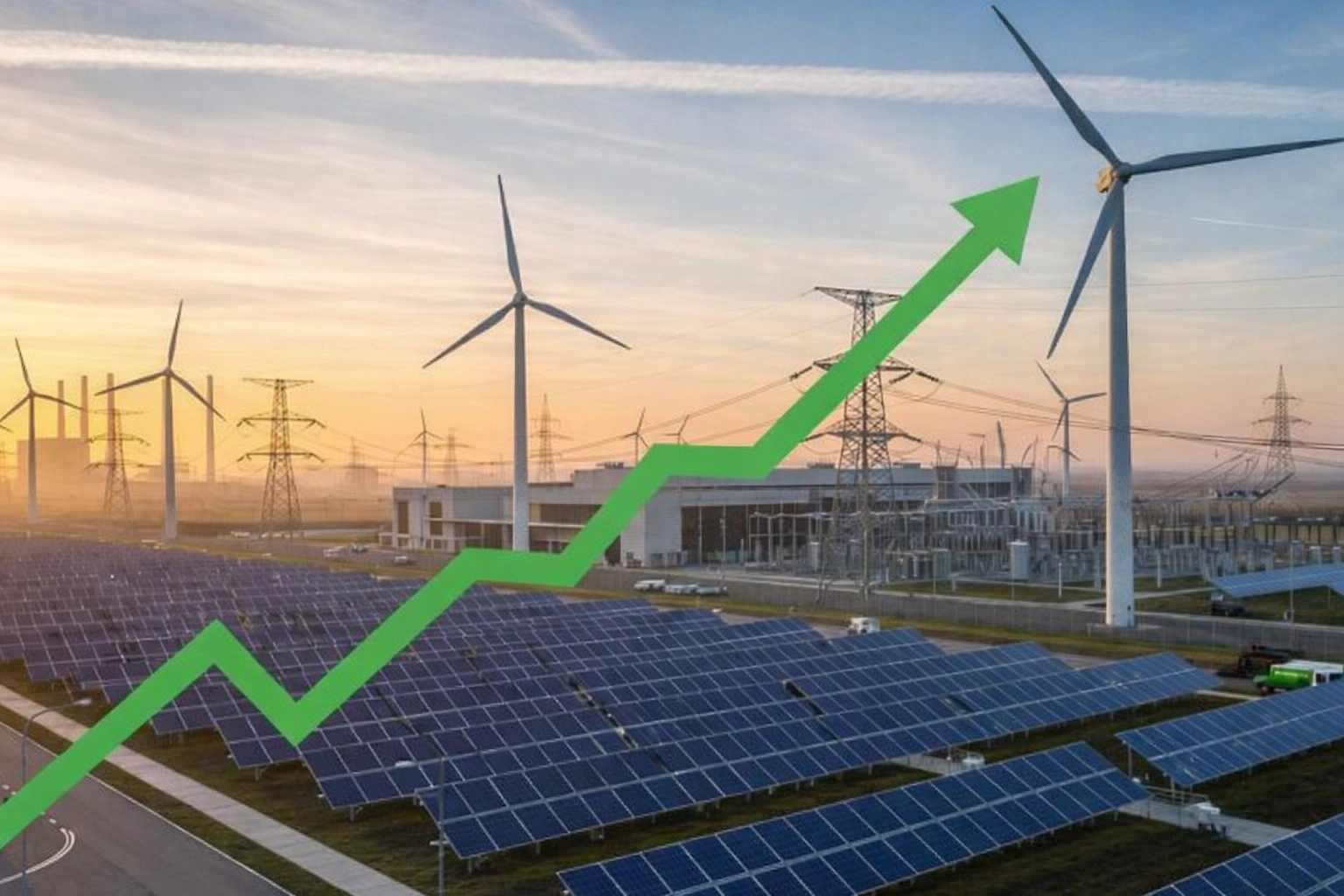
New South Wales is increasingly banking on solar-battery hybrid projects to deliver much of the new electricity capacity needed to replace its ageing coal-fired power stations, as the state moves to restart major renewable energy auctions later this year.
The NSW Government is proposing changes to the design of its Long Term Energy Service Agreements (LTESAs) to better support solar-battery hybrids, which have rapidly emerged as a preferred technology due to falling battery costs and the continued affordability of large-scale solar.
Solar-battery hybrids combine solar generation with battery storage behind a single grid connection, allowing electricity generated during the day to be stored and dispatched during evening and morning peak demand periods. The technology has dominated recent federal capacity auctions, essentially because projects are faster, cheaper and easier to deliver than large-scale wind farms.
These hybrid projects also offer network advantages, as batteries provide greater flexibility at constrained connection points. They typically face fewer planning hurdles, supply chain disruptions and transport challenges compared to wind projects.
The proposed changes form part of a broader package released by AEMO Services Limited (ASL), the consumer trustee responsible for administering both NSW and federal capacity auctions. Other measures include incentives for projects located outside designated renewable energy zones, as well as stronger protections for developments at risk of being constrained or stranded due to delays in transmission infrastructure.
NSW is under mounting pressure to deliver new capacity as its coal fleet ages and becomes increasingly unreliable. The closing dates for the Eraring and Vales Point coal-fired power plants have already been pushed back, and it is now expected that Eraring will close first — Australia’s largest coal generator at 2.88 gigawatts — will continue operating in some form beyond its scheduled August 2027 closure to manage potential shortfalls and evening price spikes.
The state initially targeted at least 12 gigawatts of new capacity by 2030, but has since lifted that goal to 16 gigawatts to account for rising electricity demand driven by electrification,Population expansion and the fast use of electric vehicles are closely related.
The change in policy coincides with NSW’s anticipated full allocation of its portion of the federal government’s Capacity Investment Scheme in the current auction, the results of which are expected by May. The state also plans to resume its own generation auctions in the June quarter, seeking a total of 5 gigawatts of capacity across two tenders in 2026, with further rounds scheduled for 2027.
“2026 is a big year for delivering the NSW Electricity Infrastructure Roadmap, with generation LTESA tenders recommencing from the second quarter alongside our next long-duration storage tender,” said ASL chief executive Nevenka Codevelle.
“Since the LTESA framework was developed, market conditions and technologies have evolved, with a clear shift toward solar-hybrid projects. These projects generally offer shorter delivery timelines and can be very important role in meeting our 2030 objectives.”
Solar-battery hybrids also avoid the negative price events that increasingly force solar farms to curtail output during the middle of the day, instead storing energy for periods when electricity is more valuable.
Australia currently has only one fully operational large-scale solar-battery hybrid — the Cunderdin project in Western Australia — which regularly supplies power into evening and overnight peaks. On the east coast, the Quorn Park project near Parkes in central-west NSW has recently been energised, while Maryvale and Goulburn River are under construction after securing underwriting agreements in NSW auctions in 2023.
A further 18 solar-battery hybrids have since won underwriting support through two federal Capacity Investment Scheme auctions, including five projects in NSW: Glanmire, Bendemeer, Middlebrook, Merino and Tallawang. Many more are progressing through planning and community consultation stages.
The rapid rise of solar-battery hybrids has already reshaped the Australian Energy Market Operator’s Integrated System Plan, which now forecasts a significantly higher share of hybrid projects and reduced reliance on new wind capacity compared with earlier modelling.
ASL has put out a consultation paper that talks about possible new LTESA designs that would be perfect for hybrid projects. Two options are under consideration: one based on fixed volumes and shaped output profiles aligned with morning and evening peaks, and another based on generation-following arrangements with shared exposure to wholesale price risk.
Indicative modelling suggests a solar-only project might secure around $65 per megawatt hour, while a shaped solar-battery hybrid could earn about $90/MWh for overnight delivery. A generation-following hybrid could get around $100/MWh with a price-risk sharing system that splits the cost in half. However, ASL said that the numbers were just for reference.
ASL aims to finalise the new LTESA design ahead of the next NSW tenders in the second quarter of 2026, which will offer 2.5 gigawatts of capacity, followed by a further 2.5 gigawatts later in the year.
Despite the growing focus on solar-battery hybrids, ASL emphasised that wind generation remains critical to the state’s energy transition.
“While these products are designed to support the increasing role of solar-hybrids, wind projects remain a key priority and will continue to be supported through existing LTESA arrangements,” Codevelle said.