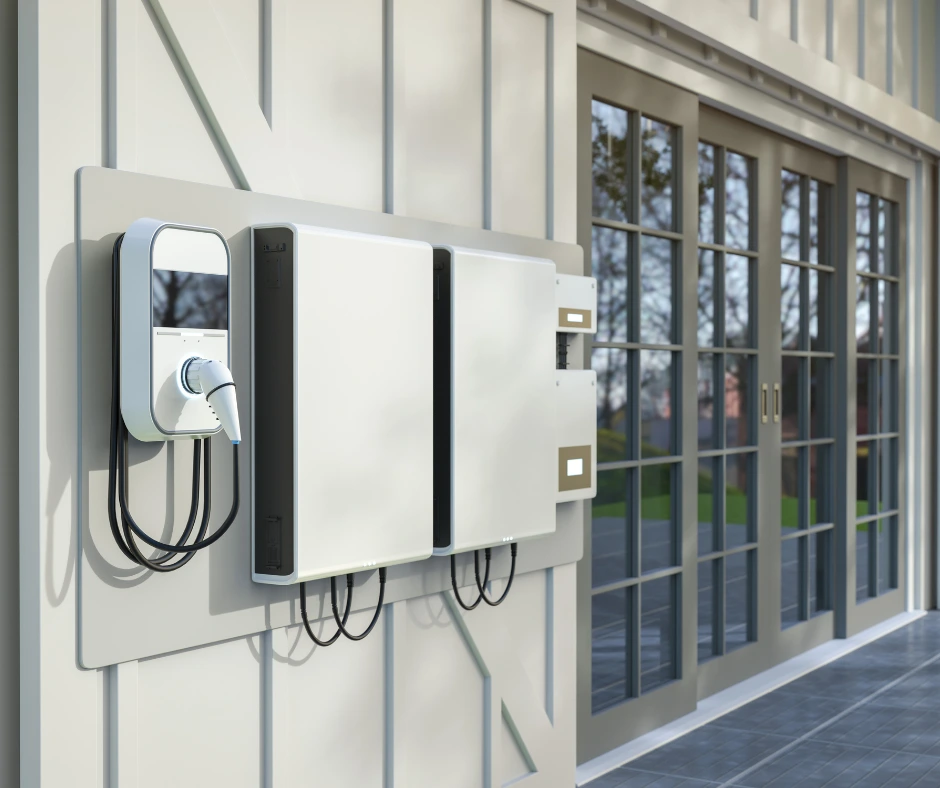
Australia’s Cheaper Home Batteries scheme has surged in popularity, recording 200,000 installations in its first six months after launching on 1 July last year.
The rapid rollout represents 4.7GWh of new battery storage capacity across homes and small businesses, with the Federal Government aiming for two million installations by 2030.
Penrith Solar Centre (PSC) founder and managing director Jake Warner said the benefits are already showing up in day-to-day energy costs.
“We’re seeing the grid become increasingly stable since the deployment of these decentralised home batteries,” Mr Warner told reporters on Saturday. “That is evident with wholesale energy prices over the last couple of weeks, and the events we typically see over a Christmas period.
“So we’re seeing these batteries work. We’re seeing everyday Australians achieve incredible results. We’re seeing power bills slashed to, in some cases, zero.”
In December, Federal Climate Change and Energy Minister Chris Bowen announced a further $4.9 billion expansion of the scheme, noting Australian Energy Market Commission data showing energy bills could fall by around 3 per cent across the system as household battery uptake grows.
By storing solar energy during the day, households can power their homes during the evening peak rather than relying on expensive coal-fired generation.
Skip Bowman, author of the monthly energy transition newsletter In the Dark, argues that “self-consumption is the exit”.
He pointed to price movements during South Australia’s recent heatwave. While wholesale electricity prices plunged into negative territory on Wednesday 7 January due to strong renewable output, the spot price surged above $1000/MWh at 7:50pm that evening.
“Grid-scale batteries are faster than gas, cleaner than gas, and perfectly forecastable,” Mr Bowman said. “In theory, they should smooth the ramp from solar abundance to evening scarcity. In real life, they did what the market told them to do. They waited.
“They didn’t discharge early to flatten risk. They held back capacity for the moment when households had no choice but to pay.”
Mr Bowman said the pattern had been consistent throughout the heatwave.
“On Tuesday, wholesale prices went negative in the middle of the day,” he said. “On Wednesday, Thursday and Friday, solar flooded the grid while demand was manageable. For most of the heatwave, electricity was cheap or free. The expensive hours were a brief, predictable window each evening.
“But households don’t see that. They pay 40 cents at noon when power costs nothing. They pay 40 cents at 7pm when power costs a dollar. The retailer pockets the difference both ways.”
Retailers smooth out extreme wholesale volatility to shield customers, but this means households miss out on the benefits of cheap daytime energy.
Bowman says that self-consumption offers genuine energy independence.
“Self-consumption doesn’t just lower your bills — it takes you out of the game,” he said. “You capture the midday abundance that retailers would otherwise arbitrage away. You use power when it costs nothing — and the margin disappears.